How to Tape Your Shoulder for Pain + Improve Shoulder Stability
Learn how to tape your shoulder for pain and better movement, plus why taping can help—and what to do when tape isn't enough.
Shoulder pain can make reaching, lifting, working out, or even sleeping uncomfortable. Kinesiology tape can be a helpful short-term tool to reduce discomfort and give your body a reminder to move your shoulder in a more efficient position.
This simple taping technique is designed to provide sensory feedback around the shoulder blade and upper back while you move through your day or exercise.
The goal isn't to wear tape forever. The goal is to use it as a temporary cue while you retrain the muscles that provide your shoulder's active stability. Better movement lasts. Build stronger movement habits →
If your shoulder feels unstable, you may need more than tape. See the Hypermobility Program →
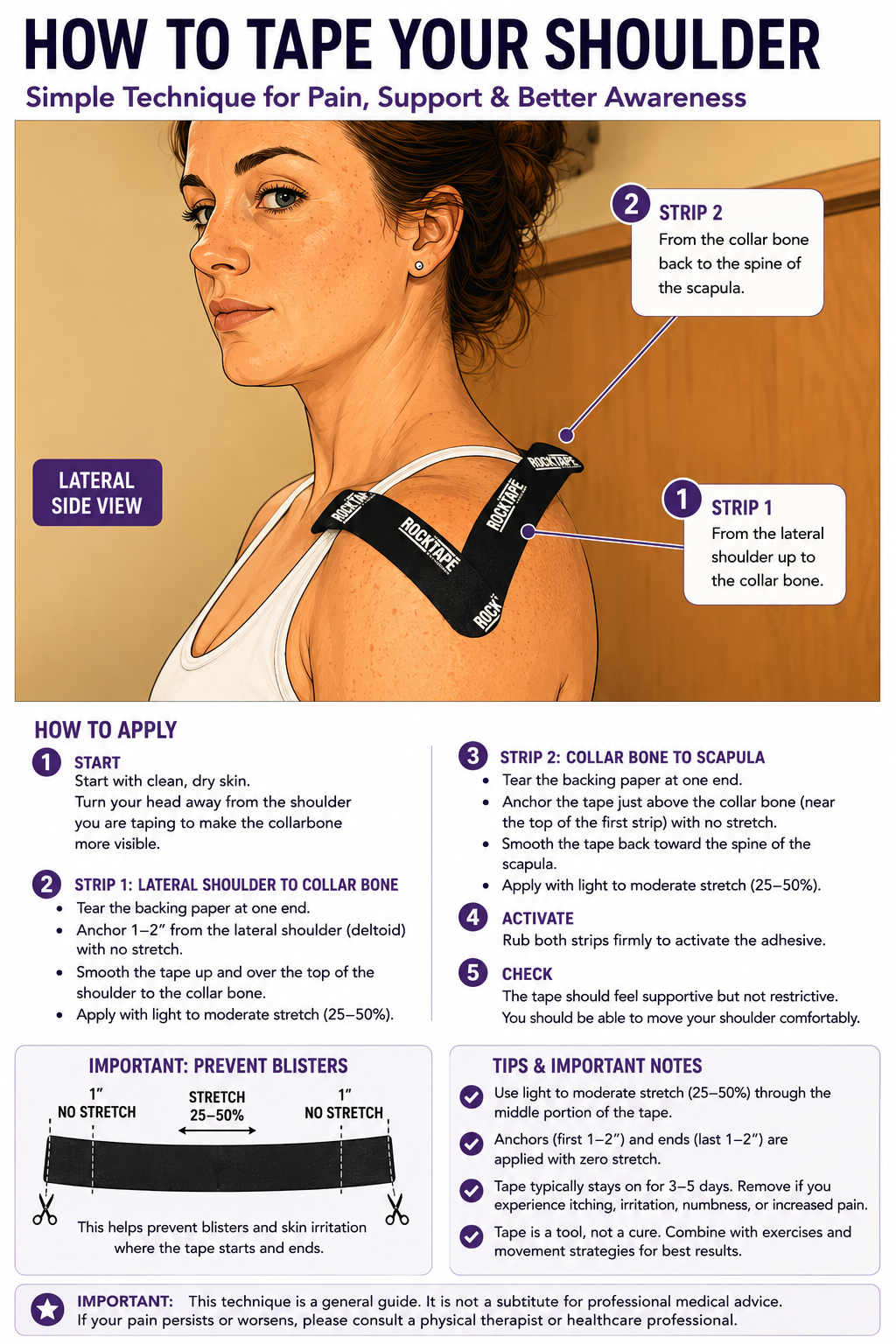
You should feel a gentle pulling or lifting sensation from the tape, not a strong pulling sensation or restriction of movement. The tape should allow you to move normally. If you develop significant itching, burning, skin irritation, numbness, or increased pain, remove the tape.
What Is Shoulder Tape Actually Doing?
Kinesiology tape isn't a brace. It doesn't physically hold your shoulder in place or permanently correct your posture. Instead, the tape provides sensory information to your nervous system. That extra feedback can improve your awareness of where your shoulder and shoulder blade are positioned while you're moving.

https://www.fitnessphysio.com/subacromial-impingement
This taping technique pulls on the skin in a way to turn on the muscles of the shoulder blade that keep your shoulder down and back. That increases the space under the collar bone area (acromioclavicular joint) where your rotator cuff tendon and bursa are by 200%. This is the most common problem area for shoulder pain with typical medical diagnoses of:
Rotator cuff/shoulder impingement syndrome
Subacromial bursitis
Rotator cuff tendinitis/calcification tendonitis
Acromium/shoulder bone spurs
The ultimate goal isn't to become dependent on tape. The goal is to use it as a temporary learning tool while your body develops the strength, coordination, and movement habits needed to support the shoulder naturally.
Your Shoulder Doesn't Work Alone
Although pain is often felt in the shoulder, the shoulder is only one part of a much larger movement system. Every time you reach, lift, push, pull, or carry something, your entire upper body works together to manage the load.
If taping helps but your shoulder pain keeps coming back, your upper back may be part of the problem. Learn how a stiff thoracic spine can change shoulder position and movement. Read: How to Get Your Stiff Back to Move →

Thoracic Extension
Your upper back provides the foundation for healthy shoulder movement. When the thoracic spine is able to extend and rotate comfortably, the shoulder blade has room to move efficiently. If the upper back becomes rounded and stiff, the shoulder often has to work harder to accomplish the same task, increasing stress on the muscles and tendons.
Scapular Stability
The shoulder blade serves as the base of support for the arm. Strong, well-coordinated scapular muscles allow the shoulder joint to move smoothly while distributing forces throughout the upper body. If the shoulder blade isn't providing adequate stability, the rotator cuff and other smaller muscles are often forced to compensate, increasing the risk of irritation and fatigue.
Breathing
Breathing influences more than oxygen intake. Efficient diaphragmatic breathing helps reduce unnecessary tension in the neck, shoulders, and upper chest. When breathing becomes shallow and relies heavily on the accessory breathing muscles, the shoulders often remain elevated and tense, increasing the workload on tissues that are already being asked to stabilize the arm.
Neck Posture
The muscles of the neck and shoulder work closely together. A forward head posture can alter how these muscles function, increasing tension around the shoulder and changing the way forces are transmitted through the arm. Improving neck alignment often helps the shoulder move more comfortably and efficiently.
Trunk Control
A stable trunk creates a stable platform for arm movement. Whether you're reaching into a cupboard or lifting a heavy box, your core muscles provide the foundation that allows your shoulder to generate force safely. Without that foundation, the shoulder frequently compensates by working harder than necessary.
Healthy Movement Protects the Shoulder
One of the most common reasons shoulder pain persists is doing too much, too soon. Muscles, tendons, and joints all need time to adapt to increasing demands. If activity increases faster than the shoulder's current capacity, the tissues may become irritated and painful.
The goal isn't to avoid using your shoulder—it's to progressively build its capacity. Tape can help improve awareness and make movement more comfortable in the short term, but long-term success comes from improving posture, breathing, trunk control, shoulder blade stability, and gradually strengthening the muscles that support the joint.
When your entire movement system works together, the shoulder no longer has to do all the work on its own. The result is more efficient movement, less unnecessary stress on the tissues, and a stronger, more resilient shoulder that's prepared for the activities you enjoy.
Tape Is the Cue. Your Muscles Are the Solution.
Learn how to correct the movement pattern that's creating the problem.
Be sure to work on the underlying imbalances that could be making your shoulder hurt while you use this taping technique so that you can eventually stop using the tape!
▶ Start the Healthy Movement Workshop Free
Does your shoulder dislocate or sublux?
Build better active stability by training your spine, scapular and rotator cuff muscles to hold the shoulder joint together. Explore the Hypermobility Program →
Ready to Build a Stronger Shoulder?
Once pain has settled and movement quality has improved, the Home Fitness Circuithelps you safely strengthen your shoulders, back, and core using progressive exercises designed by a physical therapist.
If you're finding yourself taping your shoulder over and over, your body is telling you something. Tape can reduce symptoms, but restoring the way your body moves is what creates lasting change.
The Healthy Movement Reboot was designed to teach exactly that. Start with the free trial and learn the same corrective movement progression I use with my patients every day.